I remember the day clearly.
I wadded in the classroom, gripping the arms of my schoolbag tightly. I was dressed in a crisp uniform button-up and the freshly ironed skirt school girls wear in Pakistan up until grade five. My heart was thudding slightly, the ‘new girl’ jitters still troubling me. It was my first week of Prepatory Class, the purgatory that comes after Kindergarten and before Grade One. I had already made two friends on my first day: Fatima Anees, a kindly girl who had helped me break the ice with other classmates and Omar, a boy who was only friends with me because I was friends with Fatima.
As I entered, my eyes swept through the room. Wooden, circular tables were set on the carpeted floor, already full of colorful puzzles and just tall enough for the tiny heights of children proud to have been all grown-up and beginning their Prep. My eyes landed on Fatima who always came earlier than I did. She smiled at me and beckoned.
We had a lot of plans for the day. Fatima had bought a new coloring book that she wanted to show me. I wanted to explore more of the Lego-like blocks that Omar had showed me the day before. I dropped my heavy schoolbag on the chair and, as we waited for the class teacher to arrive, dived right into the play with Fatima.
“Why are you friends with her?” A voice interrupted us. We looked up. It was one of our classmates whose name I have forgotten and should refer to as Unknown for the sake of this article. Unknown was addressing Fatima.
“Why?” Fatima asked, crinkling her brows.
Unknown gave me a glance, a very short one and then quickly looked back at Fatima. “She’s a Shi’a.”
What? I was confused. Why does that matter or change anything? Clearly, Unknown was pulling some kind of a lame joke. I turned to say as much to Fatima, but the sight of her expression stopped me. Her kind smile had thinned into a line.
A couple of kids were now looking in my direction. None of them shared my confusion. Some of them looked horrified, and some had the wondrous look one gets when they visit the zoo and find a particularly interesting animal.
“Really?” A kid chimed.
Another joined. “My Mama says that Shi’as are Kafir.”
“Yes! My Baba also says that!”
Soon, one after the another, voices joined in together, everyone telling me what their parents thought of me. Fatima turned to me and asked, quietly, “Are you a Shi’a?”
Of course I am! I wanted to say, but I couldn’t respond. My attention was torn between the many kids talking to me, about me. Which one do I listen to first? Which one do I reply to?
Fatima climbed up on the chair and using the added height, she addressed everyone with raised hands. “Stop it! I just asked her, she’s not a Kafir! She’s not a Shi’a!”
To her benefit, everyone did stop. Unknown breathed a sigh of relief and apologised. They really did think I was Shi’a, they told me. It was over as soon as it had started but something had shifted within me.
I was different.
I didn’t tell anyone that I was a Shi’a, after that. I quickly learned what rituals and events are specific to us and never brought them up at school. We passed Prep and entered Grade One. And then Two, and then Three.
Every other day, the kids would concoct a new myth about Shi’as. The ones I remember above others are that Shi’as drink blood and Shi’as don’t bury their dead. I never drank blood, I was sure of that much. I didn’t know about the dead.
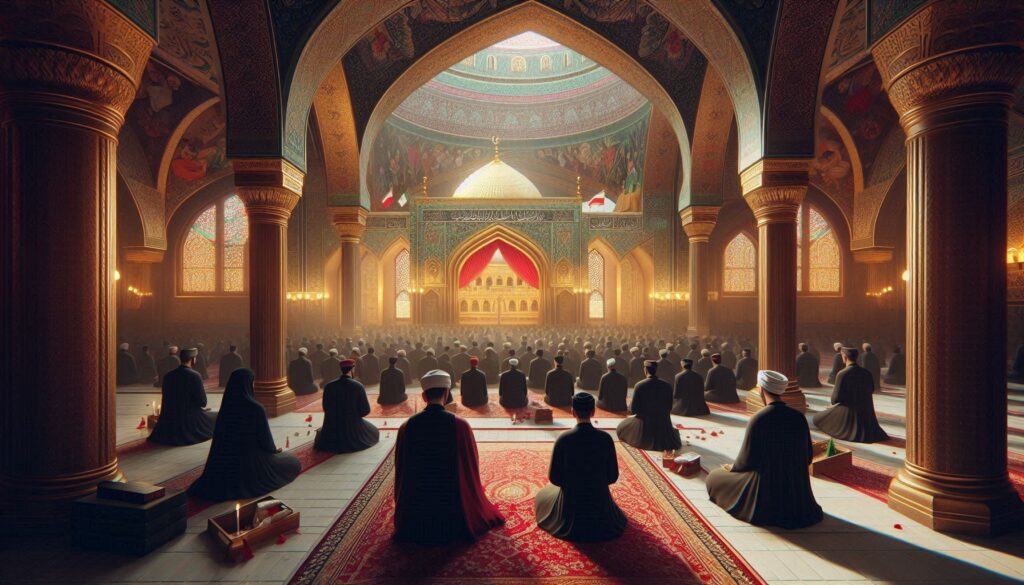
Their mothers would speak more sensibly, of course. On play dates, they also discussed Shi’as. “Going to their majalis breaks the marital bonds of a couple, did you know that?” They would discuss over tea and I would overhear over blocks. My friends called me absent-minded when I did that. I was just focused somewhere else.
At the age of 8, we moved cities. I got a new school, new friends. We transitioned from skirts to shalwar kameez. We were growing and finding our own identities.
One such identity was of a writer. I would write stories (very original ones that did not exactly copy Cinderella but with a Pakistani name) and my best friend, Noor, would illustrate them — and then we attempted to sell them to our classmates, first for 50 Rupees each but then settled for 20 Rupees because our client base was quite small.
It was one of the days that we were working on our project that we had a disagreement. I don’t remember over what it was. She threw taunts at me but I came up with quick, witty replies that I fired right back at her.
And then someone said something about me being a Shi’a.
I don’t remember the next couple of moments. All I remember is cold. Cold seeping into my hands, tendrils of it circling my feet. My heart beating fast. How did they find out?
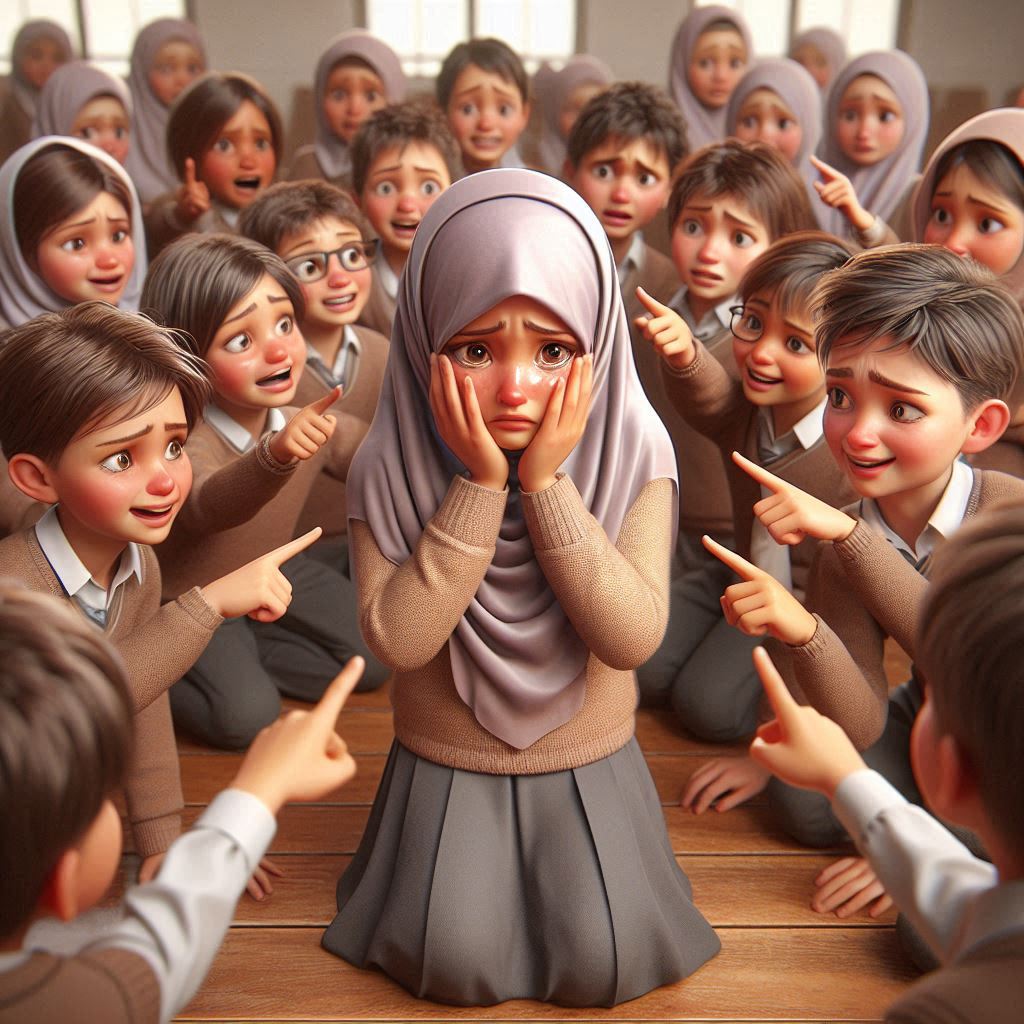
Things escalated fast. A boy started chanting, ‘Kafir!’ and others were joining in. I looked at the teacher, begging for help with my eyes. She looked away and stepped out of the classroom.
I was all alone, on my own. My best friend had her arms locked, looking at me like I deserved what was happening. The entire class was chanting, a perfect chorus of ‘Kafir’ echoing in the classroom.
I wouldn’t cry, I had decided. My eyes burned and my vision turned blurry, but I wouldn’t let those tears fall. I am not ashamed of who I am, I thought. And repeated out loud, again and again, but no one could hear me over the cacophony.
The entire scene wouldn’t have lasted very long. The class teacher of the another section had barged in and yelled at everyone until their hatred sizzled into nothing but menacing looks. She hugged me and told me that I was brave. I later found out that she was also a Shi’a. She complained to the principal about my teacher who had refused to protect me. No action was taken against her.
Of course it wasn’t.
So, does this mean I hate Sunnis?
The bullying I endured as a child and the systematic discrimination Shi’as face in the hands of Sunnis in Pakistan should have planted a seed of hatred in my heart — but, surprisingly, I do not despise them.
While the fact that Wahabbism had clearly influenced the brand of Sunnis I faced during my childhood, I don’t hate them not because of their misguidance of Shi’a beliefs but because the Islamic Ummah does not need any more enmity than it has already garnered through the hands of its enemies.
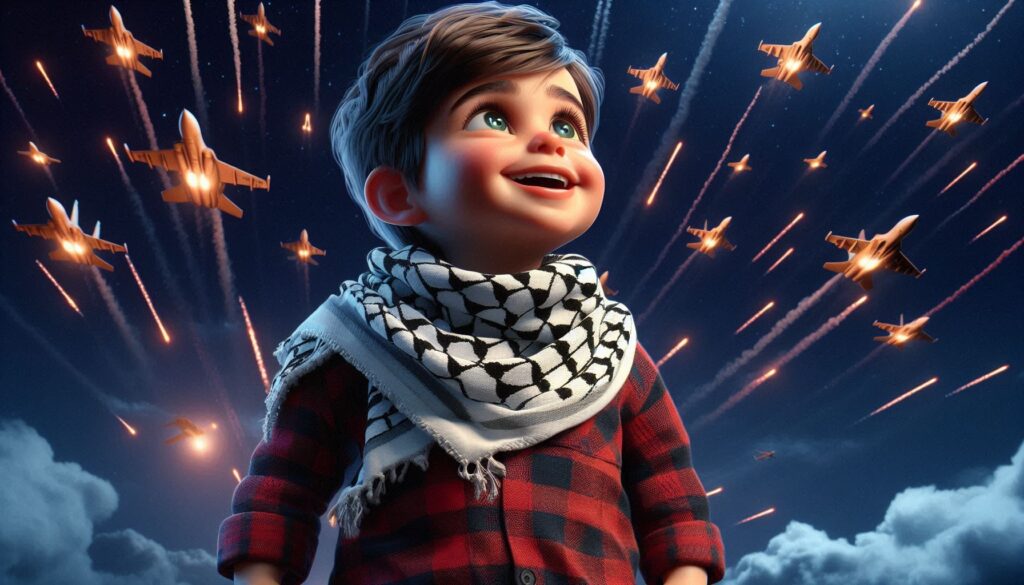
My experiences are summed up in a single tear of a Palestinian child. They are nothing compared to the sufferings of children in Yemen, in Lebanon, in Kashmir, in North Africa.
As Muslims, we face relentless attacks on multiple fronts across the globe. When not targeted by physical acts of violence, we often find ourselves subjected to misrepresentation and false propaganda perpetuated by the media.
Our enemies feed on our disunity. The key to combatting them is to unite.
Unity is bigger than all of us
As the new generation, we have the power — and the heart — to put a stop to what our parents had fuelled. Their generation was taught hatred. We can do better. For the sake of all the Muslims around the globe, we must.
We have already proven that our unity has the potential to defeat even the cruelest of our opponents – the combined strength of Hamas and IRGC. There is much more that we can achieve for the entirety of Muslims if only we choose to set aside the differences and march together in love.
If you’re a Sunni reading this, before giving into the hearsay of the Wahabbis when it comes to the fidelity of Shi’as, research. Find out the common misconceptions about Shi’as and educate the hatred out of yourself. Tell each other. Grow.
If you’re a Shi’a, forgive. Let go of the marginalisation, the discrimination. Avoid using terms that trigger the Ahl-e-Sunnah – no one is asking you to stop believing in what is the truth, take this step just to foster an environment of respect, love and actual fruitful discussions.
Taking the step forward is not going to be an easy task, but if taken, it has the potential of changing the Muslim future for the better.